
Rhythm Workshop
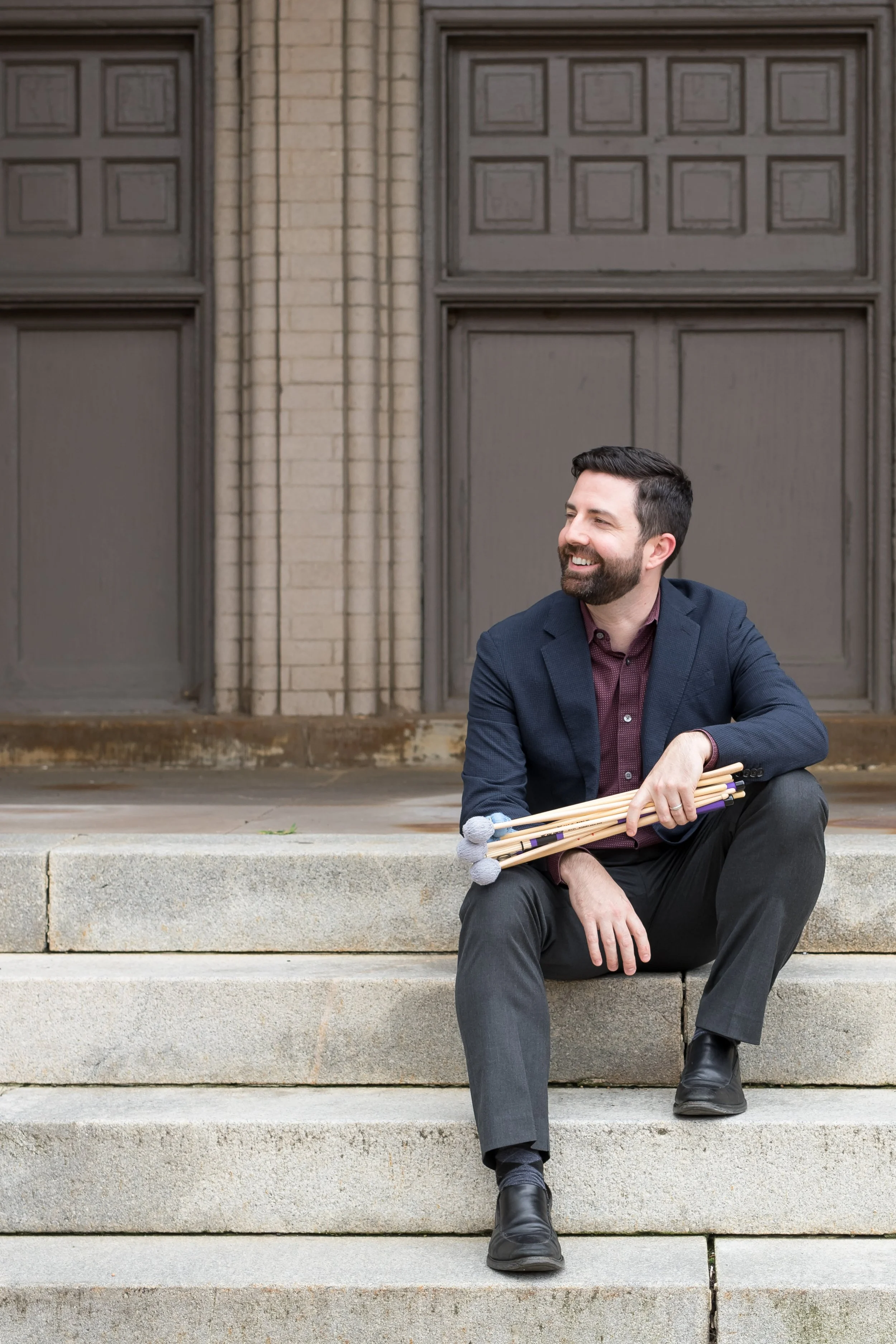
Rhythm is one of the most powerful elements in music. It can be powerful, visceral, delicate, or playful. Rhythm makes us move and connects us with sound on a physical level. Yet for many musicians, rhythm can feel abstract, elusive, and intimidating. I think I can help, and that’s why I’m excited to offer a free summer workshop to help musicians develop their rhythmic skills in a more natural, musical, and embodied way.
Rather than approaching rhythm primarily through notation or counting, we’ll learn how rhythm can be sung and embodied. This approach comes from the Carnatic tradition, where rhythmic patterns are internalized through syllables and voice. By keeping time internally and vocalizing rhythms, musicians develop a deeper sense of timing, phrasing, and groove that transfers directly to their instrument or musical practice.
The workshop will introduce several core concepts that form the foundation of Carnatic rhythmic thinking. You don’t need any prior experience with this tradition to participate.
Together we’ll learn:
How to keep time in multiple meters.
We’ll explore ways of physically maintaining pulse while navigating different rhythmic cycles.Rhythmic syllables for subdivisions.
Participants will learn the basic syllables used to articulate rhythmic subdivisions and patterns. These syllables help make rhythm feel musical rather than numerical.Groupings of 3 through 7.
We’ll practice how rhythmic phrases can be organized into groupings of three, four, five, six, and seven—skills that are essential for understanding more complex rhythmic structures.Understanding mixed meter.
Instead of thinking of mixed meter as a confusing math problem, we’ll learn to hear and feel it as a flowing musical phrase.Feeling polyrhythms naturally.
Polyrhythms often intimidate musicians when approached theoretically. Using vocal rhythm techniques, we’ll experience how layered rhythms can become intuitive and expressive.
This workshop is open to musicians of all levels and backgrounds. Instrumentalists, vocalists, composers, improvisers, and educators can all benefit from developing a deeper relationship with rhythm.
You don’t need any experience with Carnatic music, and you don’t need to read advanced rhythm notation. The focus will be on listening, vocalizing, and feeling rhythm together.
If you’ve ever wanted to:
Improve your rhythmic confidence
Understand odd meters more easily
Feel polyrhythms instead of calculating them
Expand your musical vocabulary
One of the biggest takeaways from the Carnatic approach is that rhythm doesn’t have to live only on the page. When we speak and embody rhythm it becomes clearer, more expressive, and more fun.
My goal for this workshop is to give you a new perspective on rhythm—one that replaces anxiety and overthinking with curiosity and musical flow.
If you’re interested in expanding your rhythmic toolkit and experiencing rhythm in a new way, I’d love for you to join us.